What is Roman facade? Beyond a style, an architectural statement
History and inspiration of ancient glory
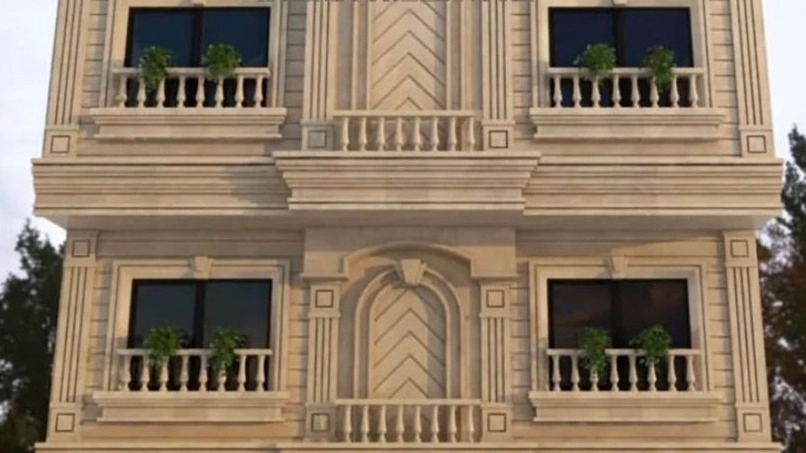
The roots of this style go back to the temples and public buildings of ancient Greece, where architects used marble to create structures with golden proportions and massive columns. The Romans inherited this art and by adding elements such as arches and domes, they brought it to the peak of glory and efficiency. Today, specialized stonework execution of Roman facade is actually a recreation of this sense of grandeur using modern techniques and materials.
Key elements in Roman facade design
Knowing the main components of this style is the first step to understanding the complexities of its implementation. An authentic Roman facade is formed by the harmonious combination of these elements:
- Columns: The main and most prominent element of the Roman facade. Columns are designed in different styles such as Doric (simple and masculine), Ionic (with spiral capitals) and Corinthian (very elaborate and ornate). The exact implementation of the column body, capital and base of the column requires high skill of stonemasonry. Arches: Round and symmetrical arches are another signature of Roman architecture that are used in entrances, windows and porches. It provides sculptures or stone inscriptions.
- Cornices & Moldings: These stone details and decorations used in window frames, roof edges and horizontal lines of the facade breathe soul and elegance into the hard body of stone. The execution of the specialized stonework of the Roman facade will be incomplete without artistic tools.
- Symmetry: The fundamental principle in classical design is complete symmetry on both sides of the central axis of the building, which creates a sense of order and balance.
Why is it important to carry out the specialized stonework of the Roman facade?
Many may think that making a stone facade is just sticking some cut stones to the wall. This misconception is the biggest threat to your building capital and safety. An unprofessional implementation not only destroys the beauty of the building, but can also lead to problems such as rock fall, water intrusion, and a sharp decrease in property value. That is why it is essential to rely on an expert team.
The difference between an ordinary performance and a masterpiece
The difference is in the details. A professional team like Sang Karan Ahura, with a deep understanding of the principles of classical aesthetics, keeps the proportions right. They know what the diameter of a column should be in proportion to its height, or how the tooling of a window frame should coordinate with the overall tooling. It is the attention to detail that transforms a building from a clumsy copy to a lasting work of art. Performance of specialized stonework for Roman facade means paying attention to these artistic details.
Durability: Investing for generations
Stone is a material for all seasons, but only if it is installed correctly. A specialized implementation includes engineering substructure and precision metal framing, using standard installation methods (such as scooping stones) and basic strapping with quality materials. This process ensures that the facade of your building remains resistant to weather factors such as rain, frost and temperature changes for decades and maintains its beauty. This is where the experience of the executive team shows its real value.
Aesthetics and precise proportions
The human eye is unconsciously attracted to proportion and harmony. In Roman architecture, these proportions follow certain mathematical principles. A non-expert performer may ignore these principles and the result will be a disjointed and visually unpleasing appearance. By mastering these principles, the team Sangkaran Ahura ensures that every element is placed in its right place and with the right size to create a unique visual harmony.
The stages of Roman facade implementation by Ahura's team of stone masons
A successful project is the result of a planned and detailed process. The Ahura stone masons team, by following a systematic process, ensures quality at all stages of the specialized Roman facade stone work:
- The first stage: consulting and 3D design
Before any action, consultation sessions are held with the employer to determine the project's needs, tastes and budget. Then, using advanced software, the 3D design of the facade is prepared. This plan allows the employer to have an accurate picture of the final result before starting the work and to apply the necessary changes.
- The second stage: the intelligent selection of stone (Stone Selection)
Choosing the right stone plays a key role in the beauty and durability of the facade. Travertine, especially Abbasabad, Hajiabad and Dere Bukhari travertine, is the most popular choice for Roman facades due to its light color, proper porosity (which allows better mortar adhesion) and excellent toolability. Our experts will offer you the best type and sort of stone, considering the climatic conditions of the region and the final design.
- The third stage: infrastructure and engineering chassis (Substructure)
This step is the hidden skeleton and the main guarantor of its safety. The executive team installs a resistant metal grid (chassis) on the walls of the building with accurate calculations. This infrastructure transfers the weight of the stones uniformly to the main structure and prevents any settlement or collapse in the future.
- Fourth step: precise cutting and artistic tooling (Cutting & Tooling)
At this stage, the stone blocks are cut to the desired dimensions based on the design drawings, using precise cutting devices. Then, skilled craftsmen tool details such as capitals, inscriptions and frames with their artistic hands. The quality of the specialized stone work of the Roman facade is highly dependent on the skill and precision at this stage.
- The fifth step: Professional installation and final strapping (Installation & Grouting)
Finally, the stone pieces are installed on the metal chassis using the scoop technique (creating a groove on the back of the stone and securing it with galvanized wires). After the complete installation, the strapping operation is done using nano and waterproof materials to prevent the penetration of moisture to the back of the stone and the final appearance of the work is uniform and clean.
The role of Ahura stonemasons in creating a perfect Roman facade
Choosing a contractor is your most important decision in your construction project. Sangkaran Ahura distinguishes itself from others by relying on three key principles:
- Expertise and experience: Our team consists of engineers, designers and master stonemasons who have years of experience focused on specialized Roman and classical facade stonework. This focus has resulted in an unparalleled mastery of the details and challenges of this particular style.
- Commitment to Quality: We do not sacrifice quality for speed or cost. From choosing the best stone quarries to using the best materials for installation and fastening, our commitment to providing a perfect and lasting job is our top priority.
- Deep understanding of classical architecture: We are not only stonemasons; We are artists who speak the language of classical architecture. Our understanding of the history, principles and aesthetics of this style helps us to turn your dreams into a magnificent and original building.
Entrusting your project to Ahura Masons means the peace of mind of an engineered, artistic and durable execution that will ensure the value of your property for years to come.
conclusion
Performance of specialized Roman facade stonework is a complex and multifaceted process that combines art, engineering and experience. More than just a building envelope, this style is a long-term investment in the beauty, authenticity and value of your property. Choosing an experienced and committed executive team like Sang Karan Ahura guarantees that this investment will lead to the creation of a lasting architectural masterpiece; A building that will be admired not only today, but also for future generations. To view our portfolios and receive expert advice, please visit the website of Seng Karan Ahura.